
Article
Your morning Java may be the last. Sip it slowly and think of its complex history - intertwined with centuries of exploitation, deforestation, and poverty. In Indonesia, the coffee industry is more than a simple cup; it is a livelihood, providing jobs for more than a million people, including farmers and workers. Yet, this vital industry is at risk due to climate change, resulting in financial losses due to declining yields and more farm inputs. The next time you drink coffee, think about survival, resilience, and the urgent need to protect both people and the planet that nurture every bean.
This article is part of web-dossier "Brewing Resilience: Coffee and Climate Change in Southeast Asia"

Indonesia’s Coffee and Deforestation Footprints
Indonesia has been one of the world’s largest coffee suppliers since the colonial era. The Dutch East Indies was the name used for Indonesia during its colonization by the Dutch. Coffee was introduced throughout the islands of Indonesia by the Dutch in the 1600s and was first exported by the Dutch East India Company in the early 1700s. Java was the first island to cultivate coffee, and this long history with the crop is one of the reasons why coffee is commonly known as "Java.”
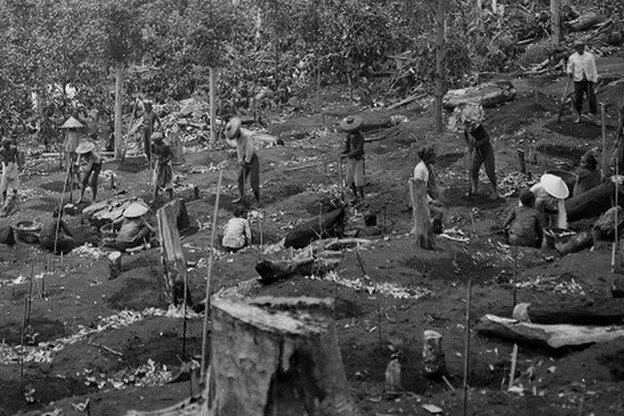
Motivated by financial difficulties due to the Java War of 1825-1830 and the Dutch against Belgium in 1830-1831 in the Netherlands, Governor General Johannes Van Den Bosch had forced the cultivation system or cultuurstelsel in 1830 in Indonesia[1]. Each village was required to set aside 20 percent of its land for growing export commodities, particularly tea, coffee, and cocoa. These crops would be sold to the colonial government at a fixed price[2]. This resulted in deforestation, especially in Java and Sumatra, since then.
The Dutch colonial rule spanning more than 350 years had reshaped societies, economies, and political systems in Indonesia. Its effects remain visible today in economic structures, cultural influences, identity shifts, political institutions, patterns of land ownership, and persistent inequality.
Economically, Dutch colonial policies were designed to extract resources rather than foster local progress. The coffee plantation system under the Cultuurstelsel forced farmers to grow cash crops for export instead of food for their communities. This also contributed to widespread deforestation to expand plantation agriculture. This system was rooted in trade monopolies that enriched the Netherlands while leaving colonized regions, like Indonesia, economically dependent.
Large Dutch-owned plantations were the norm, and the laborers and locals suffered financially and politically under the colonial regime. The 1860 novel “Max Havelaar; or the Coffee Auctions of the Dutch Trading Company,” written by Dutch author Multatuli, outlined many of the ways that the Dutch government and landowners abused and oppressed the Indonesian people, particularly in Sumatra and Java. Poverty, starvation, and destitution were widespread among coffee workers and Indigenous communities.
In the 1860s and 1870s, a coffee-leaf-rust epidemic decimated the coffee market in Indonesia and led to the abandonment of many estates by the Dutch. As the plantations broke up, laborers took up small plots of the land, eventually replanting most of the old-stock Arabica with Robusta coffee and various more disease-resistant hybrids. This land redistribution created the predominance of smallholder growers on the islands, which exists to this day.
Cafe Imports, a Minneapolis-based company founded in 1993, acknowledges Indonesian coffee’s complex, yet fascinating and diverse origin. While the majority of the coffee on the island is grown by smallholders, there are still four or five major estates that account for a production - around 4,000 hectares, as well as collection and processing. Smallholder farmers often sell their coffee cherries to the estates, which then grade and blend them for sale under the estate's name. Although coffee was once sourced directly from Indonesia, there are currently origin-direct coffees from Java. Beans are selected based on cup quality and characteristics, offering little traceability[3].
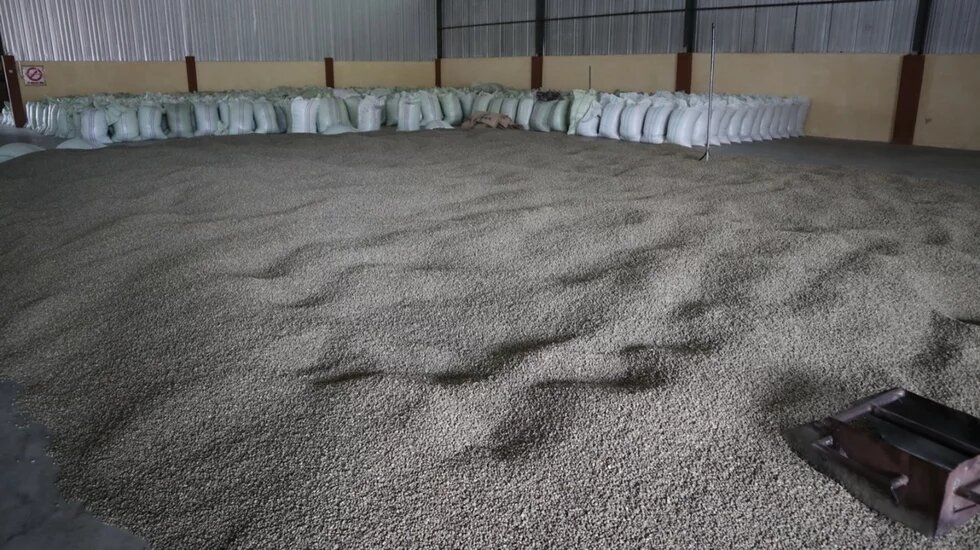
Indonesia is the second-largest coffee producer in Asia and Oceania, behind Vietnam. In the coffee year 2022/23, the coffee production increased by 2.4% to 12.0 million bags (ICO)[4]. Indonesia is also one of the most diverse coffee origins in the world, producing both arabica and robusta varieties, contributing around five percent of the global coffee exports.
The coffee sector employs approximately 1.77 million people in Indonesia; however, exports such as palm oil and rubber contribute far more to the national economy, while cereal crops remain the main focus of public research and development investment.
In the last decade, the coffee sector’s share of agricultural GDP has declined by nearly two-thirds (WCR)[5]. Despite this, Indonesia maintains a higher level of domestic coffee consumption than most producing countries (WCR). Most of Indonesia's Arabica coffees are classified as specialty coffees and command premium prices in both domestic and international markets. Several types are also labelled and protected under with geographical indications (GI) status, such as those from Sumatra, allowing them to be marketed as distinct regional products. As of May 2025, 58 regions in Indonesia have been officially registered as Geographical Indications (GI) products by the Ministry of Law and Human Rights.
Climate Risks, Shifting Production Zones, and Impacts on Livelihoods
Indonesia is a tropical country. Human activities disrupt the natural balance. After Independence in 1945, deforestation continued mainly on Java, where up to 500,000 ha (about 17 percent of the forested area) were deforested, which caused an increase in flooding and land erosion. Deforestation became a serious problem in the early 1970s, in line with the government’s intention to boost the national economy by providing logging permits to concessionaires to operate on Java[6].
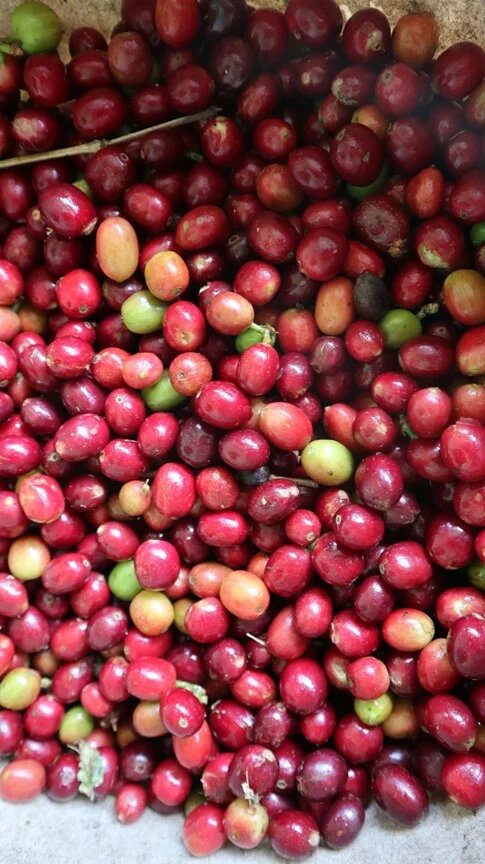
The loss of tropical forests does not only release greenhouse gases, but it also affects biodiversity, soil erosion, and water cycles. Greenhouse gases cause global warming. With rising temperatures, declining rainfall, and increasing outbreaks of pests and diseases, coffee plants are no longer growing and reproducing as they normally would. This decline in production has serious consequences for coffee farmers, leading to lower incomes and higher costs as they struggle to protect their crops and sustain their livelihoods.
In a 2018 study of Department of Agricultural Extension and Communication[7], it mentioned the study of Läderach highlighting how climate change affects coffee quality. Currently, coffee grows best at elevations between 800 and 1,400 m above sea level, but by 2050 this optimal range is expected to shift upward to 1,200–1,600 m. This aligns with projections based on a 2.5 °C warming trend and an adiabatic lapse rate of 0.65 °C per 100 m. As these shifts continue, farmers face increasing uncertainty in planning planting cycles, managing water resources, and protecting crops from sudden extreme weather.
As the climate warms, the ideal elevation for coffee cultivation will continue to rise, meaning that if farmers are unable to move their farms to higher ground, both the productivity and quality of their coffee may decline.
These will affect cultivation patterns, trade and markets, reshaping supply chains and potentially widening inequalities between regions that are able to adapt quickly and those that remain vulnerable. In this context, strengthening climate resilience through diversified crops, improved forecasting, and sustainable practices becomes critical to maintaining food security in a rapidly changing climate.
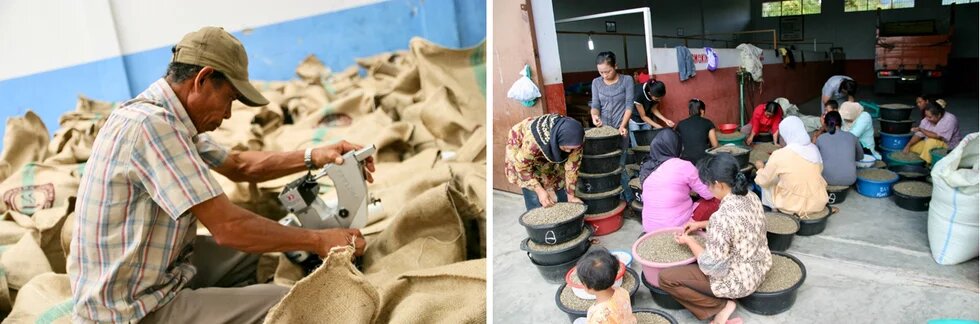
While coffee farmers are among the most vulnerable to the impacts of climate change in terms of farm production and productivity, coffee plantations in Indonesia have actually increased by 918 hectares since 2023. The total area expanded from 1,265,93 thousand hectares in 2022 to 1,266,85 thousand hectares in 2023, representing a 0.05 percent increase compared to the previous year. Of this total, 1,246,941 hectares out of total 1,266,848 hectares or 98.43% were managed by smallholder farmers according to Coffee Plantations by Category of Producers[8].
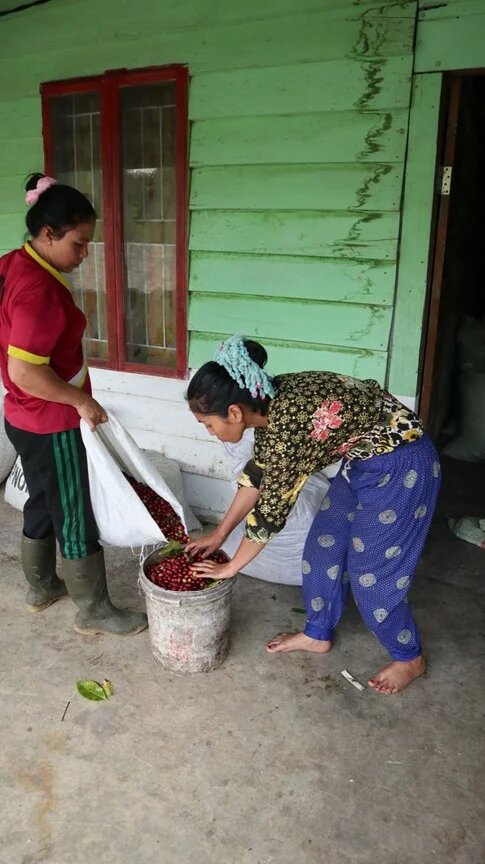
Vulnerability is when farmers are unable to cope with the likely impacts of climate change. They experience reduced yields and incomes as a result of new climate conditions. Adaptation is the approach of farmers to reduce this vulnerability by changing practices to help maintain their yields and incomes in new climate conditions.
Climate Resilience
Producer countries like Indonesia have been adapting to climate change by sustainable methods, which have been promoted as climate resilience. These include:
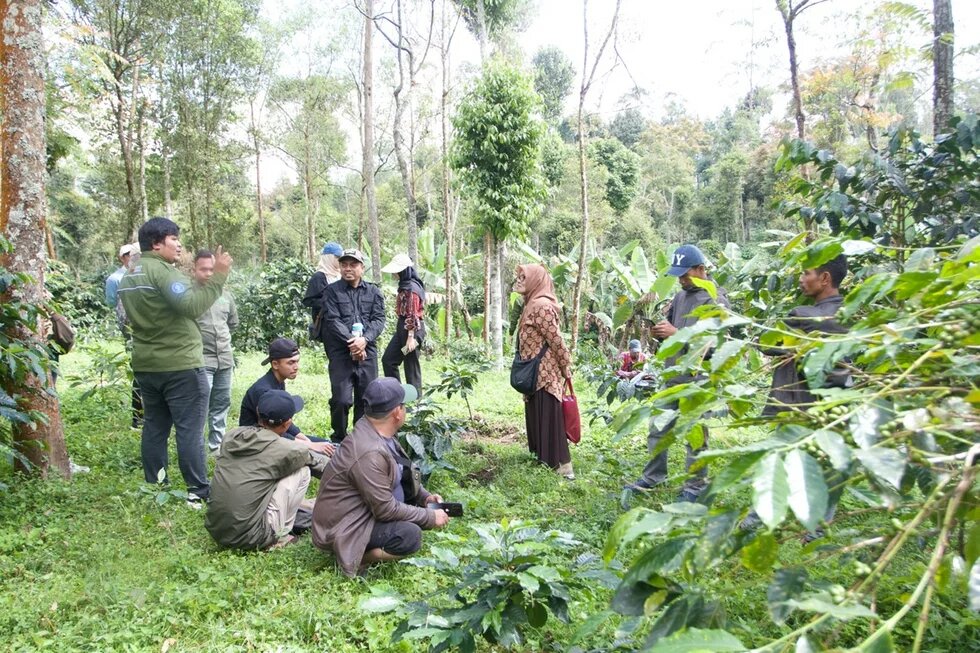
- Agroforestry. In line with the Green Economy (GE) of the 2012 United Nations Conference on Sustainable Development, Indonesian coffee farmers practice agroforestry with additional fruit trees onto coffee plots enhancing biodiversity and improving the micro-climate of the areas, as well as generating higher income. The technique has been proven to improve the coffee farming communities in the Samosir community forest, North Sumatra, Sesaot HKm in West Lombok, and Sarimukti LMDH (Forest Village Community Institution) in Ciamis.[9]
- Biochar is producing and applying biochar from coffee husks and other agricultural waste to improve soil health, reducing the need for synthetic fertilizers, and ensure long-term carbon storage etc. In a study in Indonesia using biochar from coffee husk waste and husk charcoal given as a planting medium for robusta coffee seedlings concluded that these increase the diameter of the plant in a few weeks[10].
Collective awareness of climate change remains a crucial factor in strengthening Indonesia’s resilience in the coffee sector.
EU Deforestation Regulation
Indonesia’s long journey in combating deforestation and adapting to climate change continues to shape the future of its coffee industry. Despite the significant challenges due to climate change, the sector has demonstrated remarkable resilience and adaptability. The collective efforts of farmers, researchers, and policymakers are crucial in ensuring its sustainability. By adopting innovative practices and promoting sustainable cultivation methods, Indonesia can maintain its position as a key player in the global coffee market[11].
The EU deforestation-free products regulation (EUDR) is a flagship achievement of the European Green Deal. It is a world-first in the fight against deforestation, forest degradation, and associated human rights impacts, which are driven by European production and consumption of products like beef, leather, palm oil, coffee, cocoa, timber, rubber, and soy. By setting clear standards for responsible sourcing, the EUDR encourages producer countries like Indonesia to strengthen traceability, improve land use practices, and promote transparency in supply chains.
The EUDR will serve as a support mechanism for Indonesia’s national efforts, aligning with the country’s existing commitments such as the Forestry and Other Land Use (FOLU) Net Sink 2030, the moratorium on primary forests and peatlands, and ongoing mangrove and peatland restoration programs. By leveraging market pressure, the EUDR can help strengthen the implementation of these policies and reinforce Indonesia’s pathway toward sustainable land management and climate goals.
A shared awareness and strong commitment across all sectors recognize that forests are vital to a livable future and must be protected, as upheld by the CSO Statement: Hands off the EU Deforestation Regulation on 15 October 2024[12]. The implementation of EUDR within the coffee sector has been strengthened by policies extending from the national to local levels of the government. However, continued progress in reforestation, agroforestry and compliance system is still needed to bridge Indonesia’s environmental policies with those of the European Union.
__
Yustinus Sunyoto is an Indonesian Coffee Economist and Value Chain Specialist, founder of Gayo Cuppers Team and Co-founder Sawerandah Coffee.
Disclaimer: This published work was prepared with the support of the Heinrich Böll Stiftung. The views and analysis contained in the work are those of the author and do not necessarily represent the views of the foundation. The author is responsible for any liability claims against copyright breaches of graphics, photograph, images, audio, and text used.
References
[1] Agus, S., & Sarkowi. (2020). The effect of Cultuurstelsel politics on Indonesian community development, 1830–1870. Jurnal Pendidikan dan Ilmu Sejarah (SWADESI), 1(1).
[2] Wikipedia contributors. (n.d.). Cultivation system (Cultuurstelsel). Wikipedia. https://en.wikipedia.org/wiki/Cultivation_System >
[3] Cafe Imports. (n.d.). Java coffee. https://www.cafeimports.com/europe/java
[4] International Coffee Organization. (n.d.). ICO statistics and reports. https://ico.org
[5] World Coffee Research. (n.d.). Research and resources. https://worldcoffeeresearch.org
[6] World Conservation Society. (n.d.). History and state of deforestation and land degradation. JSTOR. https://www.jstor.org/stable/resrep02085.8
[7] T Sujatmiko and H Ihsaniyati 2018 IOP Conf. Ser.: Earth Environ. Sci. 200 012054 <https://iopscience.iop.org/article/10.1088/1755-1315/200/1/012054>
[8] Badan Pusat Statistik. (2024). Indonesia coffee statistics (Vol. 8). BPS-Statistics Indonesia.
[9] Zhang, X., et al. (2023). [Article title]. Agriculture and Food, 8(4). https://doi.org/10.3934/agrfood.2023041
[10] Sujatmiko, T., & Ihsaniyati, H. (2018). [Article title]. IOP Conference Series: Earth and Environmental Science, 200, 012054. https://doi.org/10.1088/1755-1315/200/1/012054
[11] HSAT. (n.d.). Indonesia’s coffee industry: Adapting to climate change. https://hsat.space/indonesias-coffee-industry-adapting-to-climate-change
[12] Civil Society Organizations. (2024, October 15). Hands off the EU Deforestation Regulation (CSO joint statement). https://www.hrw.org/sites/default/files/media_2024/10/cso-statement_eudr_delay_october-2024.pdf


